The PI/CPC Working Group brings together AA members who want to carry the message of recovery into the public square. Current and past Public Information and Cooperation with the Professional Community chairs participate, along with service volunteers and interested AA and Al-Anon members. The only requirement is a desire to carry the message. Participants are sober members of AA or Al-Anon.
The PI/CPC Working Group also moderates the PI/CPC Category in the TIAA Forum. For more information, contact picpceastbay@gmail.com.
What PI and CPC Committees Do
AA’s PI and CPC committees give the public and professionals accurate information about Alcoholics Anonymous. Their outreach covers K-12 schools, universities, faith communities, treatment professionals, law enforcement, courts, first responders, corporations, and healthcare providers. The Internet and broader media are an important part of that outreach as well.
Public Information (PI)
PI committees take AA’s message to the general public. They present to schools and community organizations, distribute print and digital materials, and ensure local media carry accurate information about AA. Tools include public service announcements, anonymity-protected interviews, and press kits. The General Service Board established the first PI committee in 1956. Today, GSO maintains dedicated staff, a YouTube channel, and the aa.org website in English, French, and Spanish. Media professionals, librarians, and students all contribute valuable feedback.
Cooperation with the Professional Community (CPC)
CPC committees focus on professionals and those training to become professionals. They explain what AA is, where meetings happen, and what AA can and cannot do. Furthermore, they build communication between AA members and the professional community, finding ways to cooperate without affiliating. Outreach reaches professional schools, healthcare providers, courts, military bases, VA facilities, and local employers. Activities range from presentations and luncheons to placing AA literature in waiting rooms. Professionals contacted include alcoholism counselors, armed forces and corrections officers, court officials, educators, social workers, and public health officials.
Resources and Support
GSO supports PI and CPC committees with workbooks, digital card templates, and PowerPoint presentations. In addition, GSO distributes the About A.A. newsletter to professionals, and AA maintains an active LinkedIn presence through the CPC desk. Local committees share their experiences with GSO so that best practices spread across the Fellowship.
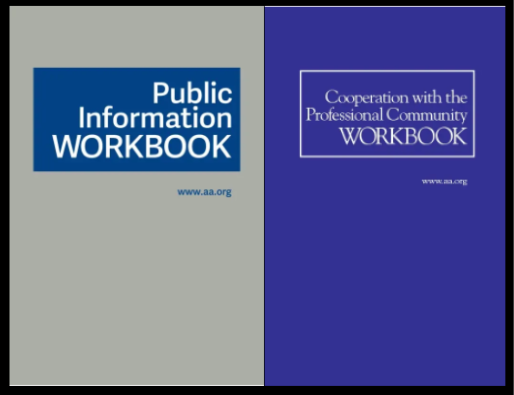
Two key resources are available through AAWS: the Public Information Workbook (M-27i) and the Cooperation with the Professional Community Workbook (M-41i). Both can be viewed or ordered at aa.org.
The PI/CPC Working Group welcomes anyone interested in outreach. Join the conversation to share ideas and learn how to help the still-suffering alcoholic.